Foster a culture of accountability and stewardship to support community needs
Maximize how we use our resources through responsible governance and performance measurement.
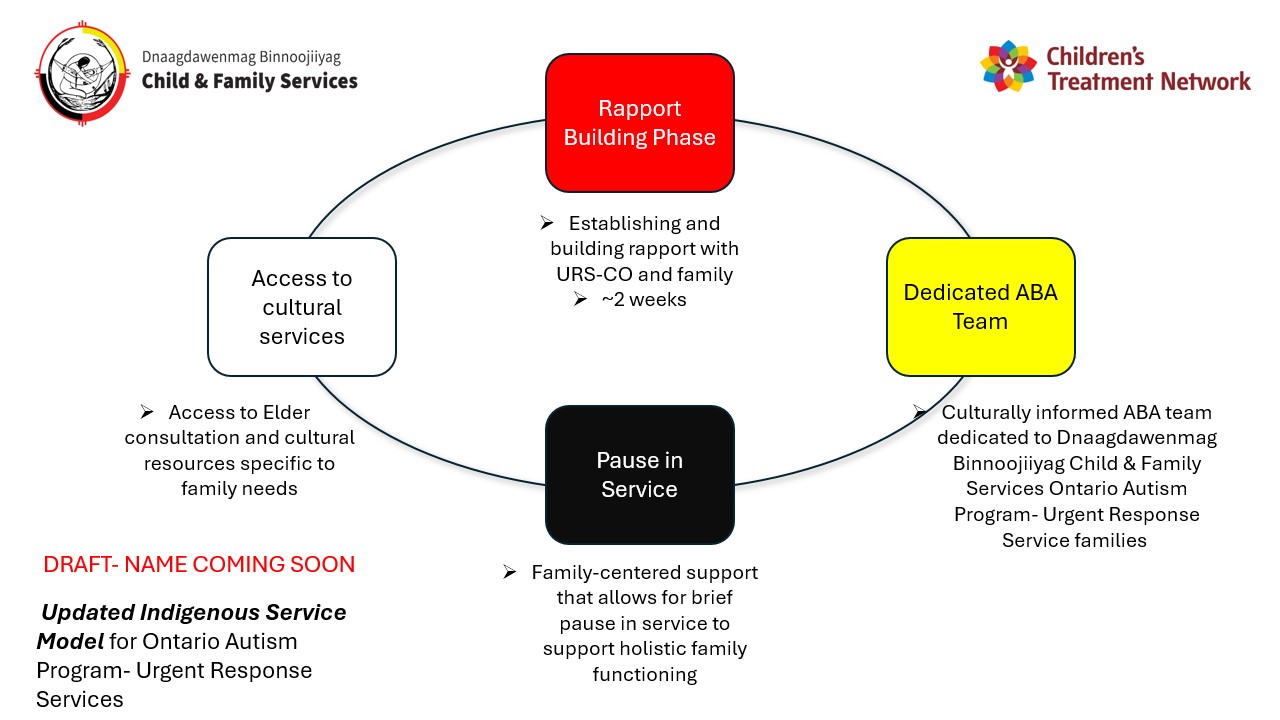
Updated Indigenous Service Model for the Ontario Autism Program Urgent Response Service
Responsive care begins with understanding what families need to feel safe, supported and respected. In partnership with Dnaagdawenmag Binnoojiiyag Child & Family Services, an updated, culturally sensitive service approach was developed for Indigenous kids and families accessing Urgent Response Service (URS).
This redesigned approach offers greater flexibility and cultural connection throughout a family’s URS journey. For families, this means a welcoming start to service, including time at the beginning to build trust and relationships; access to culturally informed Applied Behaviour Analysis; the ability to pause services when needed without losing continuity; and opportunities to connect with Elders and culturally relevant resources that reflect their traditions and values. These considerations build a more holistic, family‑led experience that respects each family’s pace and priorities. Through strong partnership and shared commitment, this approach strives to ensure Indigenous families receive care that reflects their values, honours their culture and supports their journey.
“This shift in practice within the Urgent Response Service reflects the Truth and Reconciliation Commission’s Calls to Action by advancing substantive equality for Indigenous children, youth, and families. It recognizes that equity is not achieved through equal treatment, but through approaches that honour our histories, our rights, and the distinct supports our families require to thrive. Our communities grow stronger when the work is relational, culturally grounded, and guided by our stories, teachings, and ways of knowing. When we meet families where they are, our services truly connect.”
- Dnaagdawenmag Binnoojiiyag Child & Family Services Team
kids, youth and families received Urgent Response Service.
Using Data in Ways That Respect Culture and Community
As part of CTN’s ongoing commitment to equity, diversity, inclusion, Indigeneity and accessibility, members of CTN's Privacy, Health Records and Quality teams have completed training in the First Nations Principles of OCAP®. Standing for ownership, control, access and possession, OCAP® is a tool to support strong information governance on the path to First Nations data sovereignty.
The principles of OCAP® help establish how First Nations’ data and information will be collected, protected, used or shared. Given the diversity within and across Nations, the principles will be expressed and asserted in line with a Nation’s respective world view, traditional knowledge and protocols. The training strengthens CTN’s capacity for strong privacy standards while aligning with national principles for ethical data stewardship. By embedding OCAP® principles into our work, CTN continues to build a culture of respect and accountability that supports families with care and cultural understanding.
Creating an Accessible Experience for Families at Barrie Common Roof
When families feel welcome in the spaces they visit, connection and collaboration can truly thrive. In September 2025, CTN and The Common Roof celebrated the opening of the new Trillium Room at the Barrie Common Roof – an accessible community meeting space designed with families and the community in mind.
Made possible through a grant from the Ontario Trillium Foundation, the Trillium Room enhances CTN’s ability to work alongside partners in a more inclusive, flexible environment. The space is fully accessible and equipped for both in‑person and virtual meetings, making it easier for families and service providers to come together in ways that reflect diverse needs and preferences. For families, it offers a comfortable place for services, conversations and connection. Available to employees, partners, volunteers and community members, the Trillium Room shows how partnerships can create welcoming spaces to support families.
attendees at CTN’s learning and development sessions.
Making Language Access Easier for Families Receiving Care
Clear communication is essential to family-centred care. In December 2025, CTN simplified how interpretation services are booked across the network, making language support more equitable, timely and consistent for families.
Interpretation and translation services are now available in more than 30 languages through a simple and consistent process. This helps to reduce communication barriers and provides families with information in their preferred language earlier in their service journey. Families can better understand options, share their perspectives and take part in decisions. The coordinated approach reflects CTN’s commitment to equity, access and inclusion while also supporting greater consistency across the network. By reducing language barriers and enhancing communication, families can engage with services more confidently in supporting their kids and youth.
Building Knowledge Through Network and Industry Collaboration
Behind every family experience is a network of people learning, improving and working together. At CTN, building knowledge isn’t just about sharing ideas, it’s about turning learnings into better support for kids, youth and families.
Over the past year, we collaborated with partners across the sector, locally, provincially and internationally, to share expertise in areas like implementation science, network‑based care, quality measurement and service innovation. Shared learning across the network can help create a more consistent experience for families. This past year, we focused on holistic thinking, collaboration, privacy and Indigenous data governance. By investing in people, partnerships and shared learning, we’re strengthening care and shaping a more connected system for the families we serve.